Information on Bees - Myths Surrounding Bees
I think it’s a real shame that people don’t fully understand pest control and what pest controllers do. I guess most people assume we kill everything in sight. This is far from the truth!
Most professional, ethical pest control companies such as The Pest Master actually spend a lot of time trying to educate people about bees. The Pest Master does not harm bees unless there is a direct risk to human life, and we don’t just take the customers word, this has to be proven by a doctor's letter or something similar.
Many people that call us will say that they are allergic to bees, and this isn’t perhaps the whole truth.
When someone discovers bees in or around their property they may call a professional company for advice where a lot will turn to social media for their answers or solutions. They will generally search for ‘how do I get rid of bees’ , ‘how to remove bees’ or ‘what should I do if I discover I have bees’ , and often find something along the lines of ‘don’t call pest control they will only kill them’.
Reading through some of the responses from the general public can be quite alarming as there appears to be a lot of advice that people are giving which is generally the wrong information.
Information like ‘call a bee keeper’ , ‘don’t harm the bees’ or ‘bees are protected’ , and maybe even‘ burn them!’. You will often come across some quite upsetting suggestions.
To the average human being, most of us wouldn’t burn bees and wouldn’t kill them unnecessarily, however some people do listen to the advice. Normally the people handing out the advice have no clue what they are talking about and have no experience nor qualifications on the topic.
So let us clear some of these myths up.
Are bees protected?
No bee specie is protected under UK law unfortunately, however this is not a big green flag to go ahead and destroy them. There are lots of rules and regulations that pest controllers have to and should follow especially regarding honeybees.
Bee keepers only generally collect honeybees and no other bee specie, however not every beekeeper is willing to remove a bee colony, because if any of the bees are poorly they run the risk of killing off other honeybees that the beekeeper may already have.
So, the most common bees that The Pest Master comes across is the bumble bee (white tail or red tail), the masonry bee, mining bee and of course the honeybee. There is a big difference between these bees.
Bumble Bees
Usually if the bumble bees are around your property they will have found a safe place to have their babies. Once they have had their babies they will generally move on. There is also the possibility that they are only there for your flowers and plants, not always have they set up home. They can build their nests in roof spaces and cavity walls and will normally cause you no bother, they don’t damage your property and if left alone they will have their babies and leave!
Masonry Bees
Masonry bees will make holes in the cement, have babies and when this process is finished will leave with no bother. These may cause minor damage to the mortar which can be easily rectified. It is good practice to let the bees do their thing and when there has been no activity for a few weeks simply fill in the little holes with some mortar.
Mining Bees
Mining bees will build their nests underground, this may be in the soil and other grassy areas. The best advice we can give is avoid the area if possible, let them have their babies and allow them to be on their way.
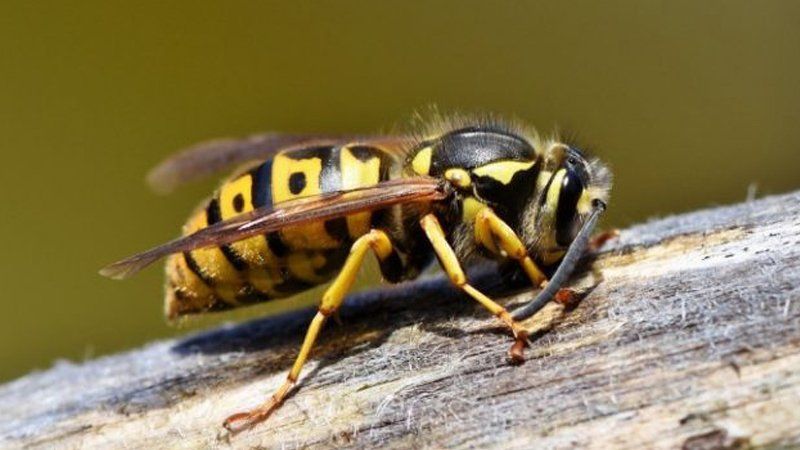
Please be careful and make sure you identify the correct specie, as wasps also live in roof spaces, cavities and underground. There is a very big difference in aggressiveness.
Honeybees
Honeybees do exactly what it says on the tin. They produce honey, usually in a cavity wall, chimney or roof space. Ideally honeybees need to be removed as if they have set up home in your property they will not disappear like the bee species we discussed before. They will continue to grow in numbers and create nests that will usually grow year on year. Don’t worry! We still don’t have to kill them. There are many companies out there that specialise in honeybee removal. The Pest Master can assist with this and usually the bees can be removed and most of the time relocated. It is an awful lot of work and can be very expensive depending on where the bees are.
Let Bees Live
Let me repeat myself, The Pest Master does not kill bees unless there is a risk to life! Over the years we have done thousands of bee jobs and spent many hours advising customers, handling bees and educating customers on how bees are beautiful. Some bees can sting but will only normally do so as a last resort. Again, this is very different to the wasp.
Our advice as an ethical, professional company is please don’t assume that we kill everything in sight as this is far from the truth. When selecting a company or taking advice from social media the right thing to do, any company whose first approach is yes we treat bees; we wouldn’t recommend using them.
Things to do if you think you have bees
Firstly try and identify what type of bee it is as this will be important.
Secondly, contact an expert in this field for proper advice and lets make a plan going forward of how we can protect customers and the bees.
We are always happy to help and advise, it costs nothing to have a chat with us other than the cost of a call. Please remember we need bees, they are very important to our eco system and we shall do whatever we can to protect them.