All About Ants
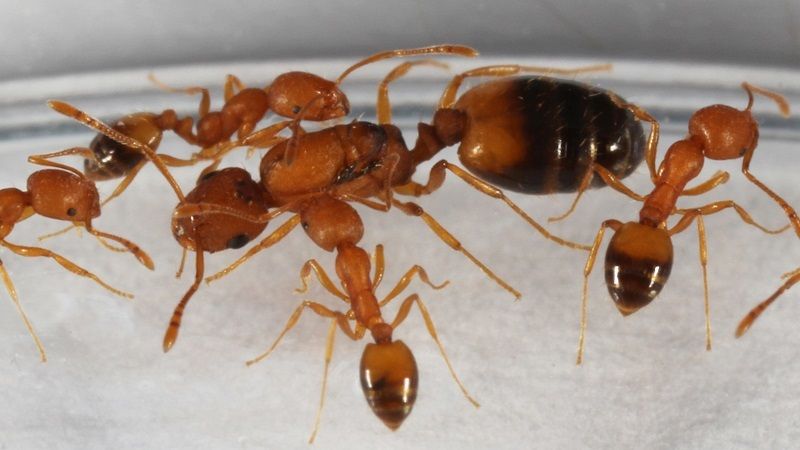
Ants are social insects that live in colonies consisting of hundreds or thousands of individuals. They are known for their organized behaviour, work ethic, and ability to communicate with one another. Here are some interesting facts about ants, their behaviours, and their nests.
All around us
Ants are found all over the world, except for the polar regions and have been around for more than 100 million years! They are believed to have evolved from wasp-like ancestors. There are over 12,000 species of ants known to science, with more being discovered all the time.
Ants are incredibly strong and can carry objects up to 50 times their body weight. They are social insects and live in colonies that can range in size from a few dozen individuals to millions. Ant colonies are typically made up of a queen, male drones, and female worker ants. The queen ant is responsible for laying eggs, while the worker ants are responsible for gathering food and caring for the young. They communicate with one another through a complex system of pheromones, chemicals that they secrete to signal messages to other members of their colony.
Ants are very organized and have a division of labour within their colonies. Each ant has a specific job to do, based on their age and size. They are known for their ability to work together to solve problems, such as building bridges or rafts to cross water.
They are omnivorous and will eat almost anything, including insects, plants, and other animals, with some species of ants are known to farm fungus, which they use as a food source. Although largely classed as a pest when they invade our homes, ants are important for the ecosystem, as they help to aerate soil, distribute seeds, and control insect populations.
‘Ant’ the builder
Ants are capable of building some of the most complex structures in the animal kingdom, including underground tunnels and elaborate nests. The nests can range in size from a small hole in the ground to massive structures that can cover several acres. Nests are often built underground, but some species build their nests in trees or other above-ground structures. Ant nests are typically made up of chambers and tunnels, which are used for storing food, caring for young, and protecting the colony.
Some species of ants, such as leaf-cutter ants, are known for their ability to strip entire trees of their leaves to build their nests. Ants are very territorial and will defend their nests aggressively against intruders. Ants are capable of working together to solve complex problems, such as finding the shortest route to a food source or defending their nest against predators.
Ants are social insects that live in large colonies. While some species of ants are beneficial to the environment, others can become pests when they invade homes and gardens in search of food and shelter. Ants can contaminate food, damage structures, and cause allergies in some people.
Ant pest control
Dealing with an infestation of ants in your home can be extremely troubling. They usually build their nests under the ground, making the nest almost impossible to find. Controlling the ant issue may be difficult if you try to tackle this by yourself, but there are a few ways we can help you to control them. The most common treatment used by the general public before they result to employing the services of a pest controller is using ant powder, sprinkling it all over the premises causing a real mess. However, when you use home brought ant powders, you risk harming some of the other non-target species and, at the same time, there is the danger of harming animals or humans.
Chemical sprays are commonly used to kill ants, but they can also harm beneficial insects and the environment. Here at The Pest Master we use professional-grade gel for ant control because it is the ideal way of controlling the ant colony, especially if you inject it strategically or place it in bait stations. This gel is carried back to the source of the problem, the nest, where treatment occurs.
Once an ant infestation is dealt with there are a few things you could try to help prevent them returning in the future. These can include creating physical barriers such as sealing cracks and crevices, trimming vegetation, and removing food sources can also help prevent ants from entering homes and gardens.
In summary
As professionals, we don’t recommend trying ant pest control and treating your ant infestation yourself. You could potentially make matters worse or more so risk none target species and or the environment. Get in touch and let the professionals do it for you, for a longer lasting and more effective Ant treatment.